Airports face complex operational challenges, where managing routine tasks and responding to sudden changes demands precision and timeliness, making proactive communication essential. Relying solely on manual execution introduces risks: without automation, repetitive tasks fall on staff, diverting their attention from other responsibilities, increasing the likelihood of communication errors, such as incorrect display information, missed announcements, or outdated content. Even experienced personnel can make mistakes under pressure. At airports of any size, these errors can turn minor disruptions into larger issues, reducing passenger confidence and placing additional stress on staff to resolve errors while managing other critical tasks.
Our Scenarios tool enhances preparedness by automating essential visual and audio communications, enabling swift, consistent responses to both routine and emergency situations. With pre-set responses, airports deliver timely, consistent messaging through announcements and display content across the entire airport, activated by just the push of a button.
The centralized management system in Airport CX allows staff to oversee active scenarios in real time, with options to monitor, adjust, or deactivate scenarios as needed, keeping airport operations organized and efficient.
Synchronization of Visual and Audio information
Activating pre-set scenarios that synchronize pre-recorded and text-to-speech audio announcements with display content across terminals enables location-specific communication. This setup allows audio messages play in designated zones, delivering information in multiple languages for passengers while providing tailored updates for staff. Simultaneously, screens of various sizes and orientations display relevant multilingual content, so passengers can read it no matter where they are in the terminal. This approach enables clear and efficient communication that is responsive to the airport's layout, the diverse PA and display setups, and the needs of various audiences.
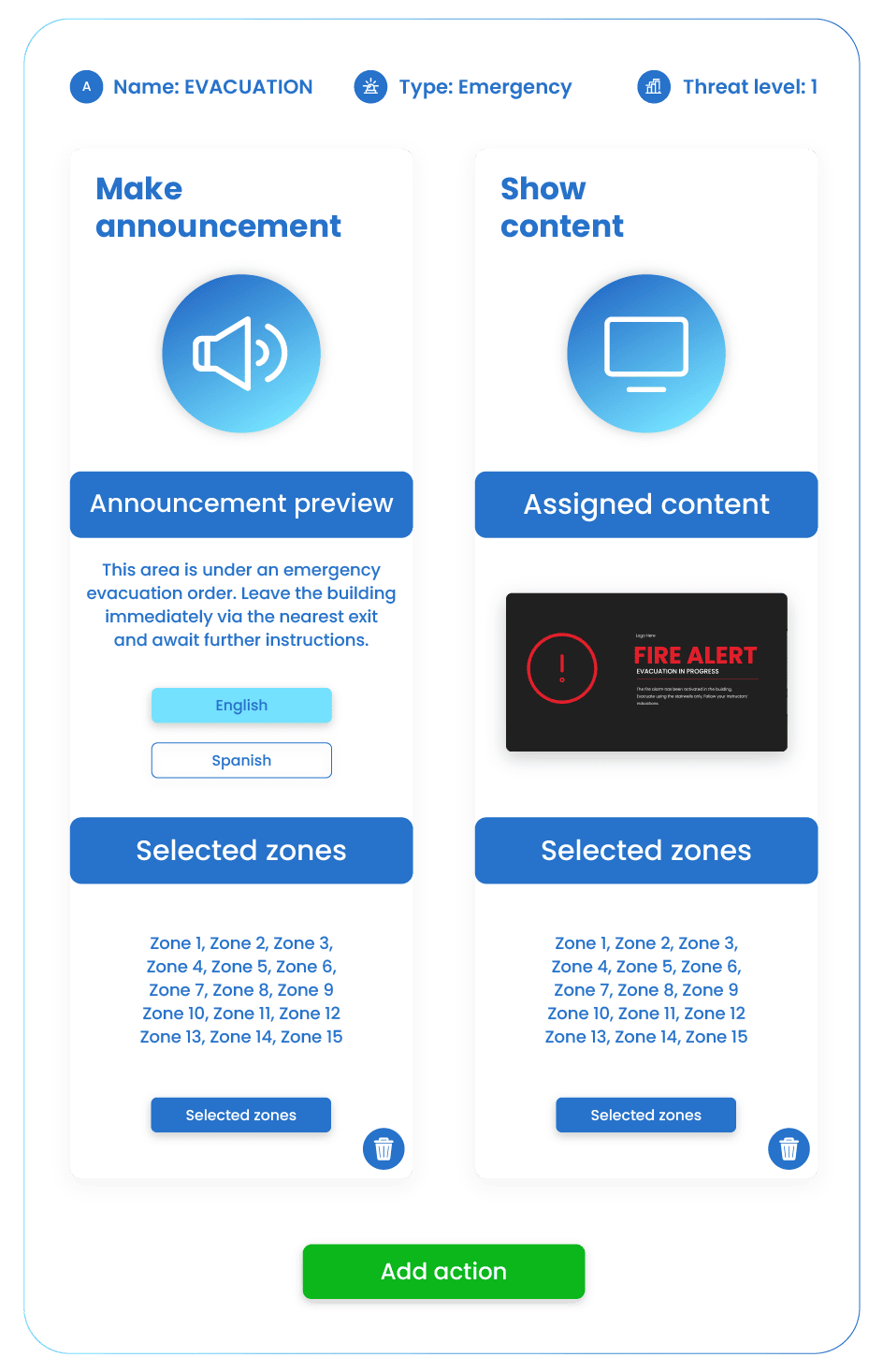
Prioritizing Critical Alerts
Routine announcements and critical alerts can occur simultaneously, making effective message prioritization essential. A priority-based announcement system allows airports to keep critical alerts above routine messages, delivering important information to passengers and staff without delay.
Emergency scenarios, such as fire alarms, can be prepared in advance to automatically repeat announcements at intervals across selected PA zones within the airport. Everyone in those areas hears it, and the repeated message catches latecomers. To minimize distractions, regular announcements can be paused or suppressed during these critical alerts.
Using Scenarios for Dynamic Map Updates
In emergencies or during maintenance that requires closing certain airport areas, timely communication is essential for passenger safety and smooth operations. Using scenarios to trigger dynamic changes in display content, airport staff can effectively manage and relay information on digital maps. This approach allows staff to quickly open or close areas on the map with a single button press, travelers see access restrictions immediately. Additionally, this functionality can be synchronized with audio announcements, delivering consistent messaging across both visual and auditory channels.
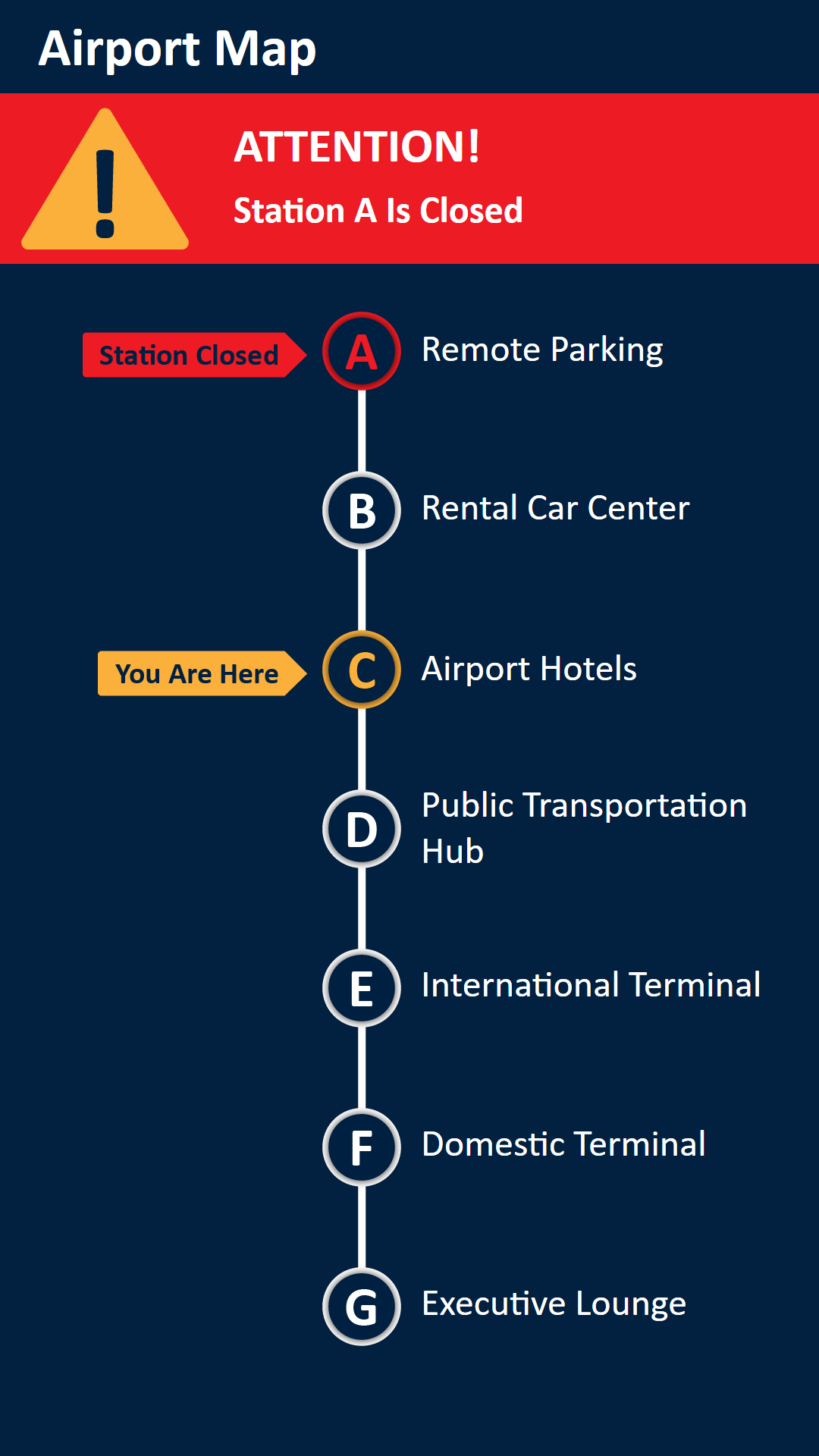
Leveraging Input Data for Airport Scenarios
Airports can sharpen their response by using pre-set scenarios that allow for easy input of data during various situations. This functionality integrates custom data and flight data into audio announcements and display content.
Baggage Delay
In cases of baggage delivery delays, airports can speed up communication by preparing specific scenarios that incorporate input data. Before activation, the operator simply enters the relevant flight details into designated fields. The system then updates display content with the baggage delay information and plays a corresponding audio announcement in the appropriate areas. This timely dissemination of information keeps passengers informed, reduces confusion, and enhances overall operational efficiency during disruptions.
Public Safety Alerts
For critical public safety alerts, such as a missing person alert, an immediate and organized response is vital. By having a pre-configured alert scenario, staff can simply enter essential details (name and description), prompting the system to automatically issue announcements and display relevant information on screens across selected zones, supporting a coordinated effort to locate the individual.